
Oil Volatility and the Stocks That Move with It


Oil Volatility and the Stocks That Move with It
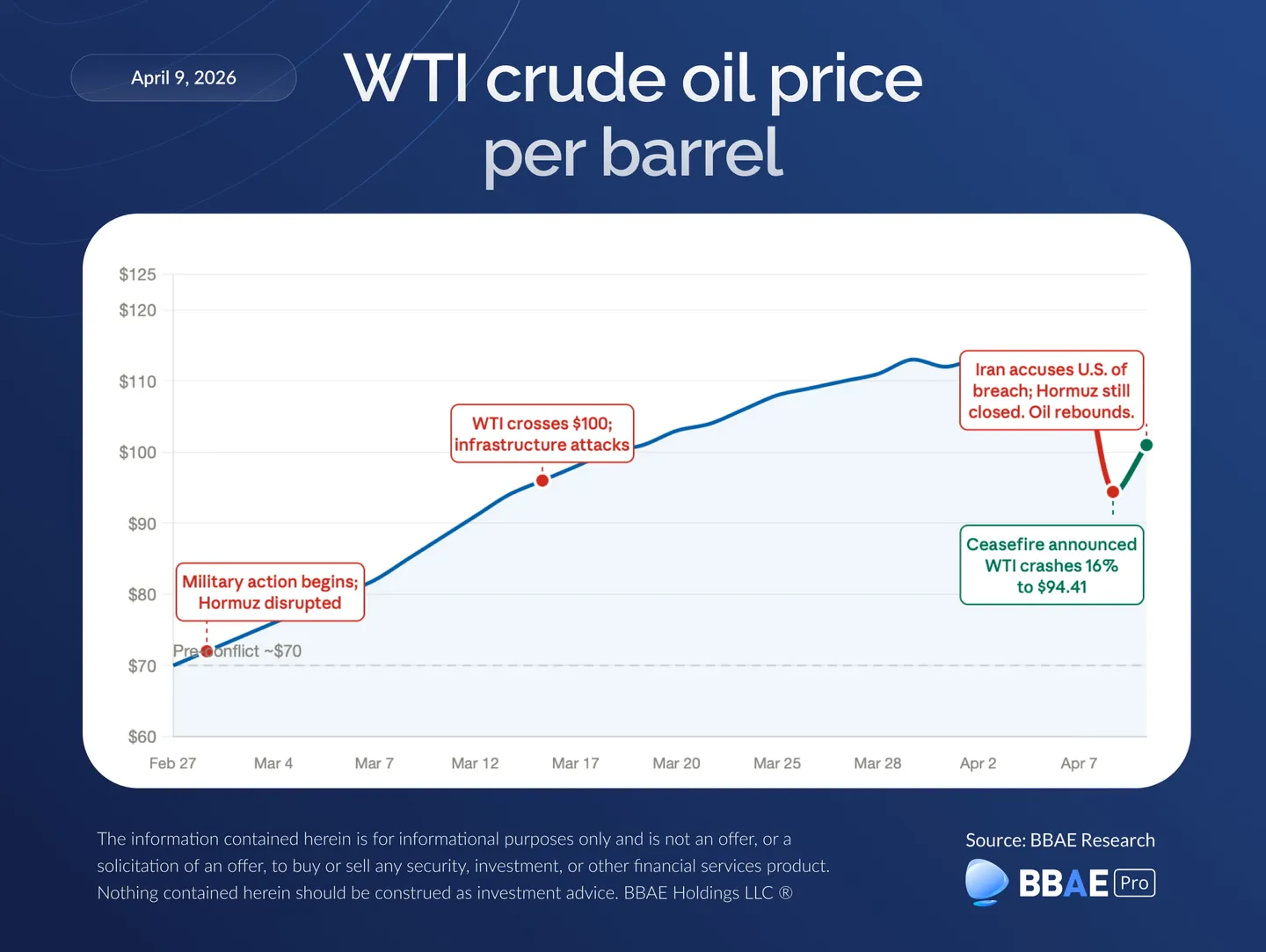
Oil is the market’s mood ring right now. On April 8, 2026, a two-week ceasefire announcement between the U.S. and Iran sent crude plunging more than 15% in a single session, its biggest daily drop since 2020. Stocks surged across the board, with the S&P 500 jumping 2.5% and fuel-sensitive names like airlines and cruise operators leading the charge. But barely 24 hours later, oil bounced back above $100 as Iran accused the U.S. of violating the deal and the Strait of Hormuz remained effectively closed to tanker traffic. Stocks gave back some of their gains.
This kind of whipsaw is likely to continue. The ceasefire is conditional, both sides are already pointing fingers, and the strait, which handles roughly a fifth of global petroleum flows, has not meaningfully reopened. That means oil prices will keep swinging, and so will the stocks most exposed to them.
How Oil Volatility Transmits to Equities
When crude moves sharply, it doesn’t just affect energy companies. Fuel is a cost input for airlines, shipping firms, and cruise operators. It feeds into inflation expectations, which influence interest rate bets and consumer confidence. A sudden drop in oil can trigger a broad risk-on move, tightening credit spreads, boosting cyclicals, and softening the dollar. A sudden spike does the opposite. The conflict in the Middle East has amplified this dynamic because the Strait of Hormuz is the world’s most important oil transit chokepoint. Any headline about its status, open, closed, or partially reopened, can move crude by several dollars in minutes and drag equities along with it.
Where Things Stand Today
A ceasefire was announced on the evening of April 7, with Iran agreeing to allow coordinated passage through the strait during the two-week window. But on April 9, oil jumped back above $100 after Iranian officials said Washington had breached the agreement, and reports emerged that tanker traffic through the strait was suspended again following Israeli strikes on Lebanon. The U.S. Vice President said there are signs the strait may begin reopening, and negotiations are expected in Islamabad later this week. In short: nothing is settled. Oil remains well above pre-conflict levels of around $70, and the market is trading on headlines more than fundamentals.
Stocks That Tend to Rally When Oil Falls
These are the names that benefit most when crude drops, whether because fuel is a direct cost, because lower oil eases inflation fears, or because they tend to catch a risk-on bid when geopolitical tension fades.
Stock | Oil-Drop Sensitivity | 52-Wk Perf. |
Carnival ($CCL) | Cruise margins are highly fuel-sensitive. Lower crude directly improves profitability and supports travel-booking sentiment. Rallied ~9.6% on April 8. | +70.60% |
Royal Caribbean ($RCL) | Same fuel-cost dynamic but generally viewed as the higher-quality cruise operator, attracting more durable institutional flows on oil dips. | +55.53% |
United Airlines ($UAL) | Jet fuel is one of the largest airline cost items. When crude drops, margins expand immediately. Jumped ~7.9% on the ceasefire day. | +63.86% |
Delta Air Lines (DAL) | Similar jet-fuel exposure. Delta recently hiked baggage fees citing surging fuel costs, so a sustained oil decline would relieve that pressure. | +82.57% |
Amazon ($AMZN) | Benefits from easing freight and fuel costs across its logistics network. Also acts as a liquidity magnet on broad risk-on days. | +26.24% |
The Home Depot ($HD) | When oil drops, inflation expectations cool and rate-cut bets can increase, helping housing and renovation sentiment at the margin. | -1.57% |
JPMorgan Chase ($JPM) | Risk-on days tighten credit spreads and boost animal spirits. Financials catch a bid when fear recedes, though falling yields can pressure net interest margins. | +43.62% |
Boeing ($BA) | Travel confidence supports order and production optimism. De-escalation also reduces supply-chain disruption risk for complex global manufacturing. | +56.85% |
GE Aerospace ($GE) | Engine and aftermarket revenue benefits when flights normalize and air travel demand grows. Tends to perform well in risk-on environments. | +83.70% |
FedEx ($FDX) | Lower fuel costs help margins directly. Normalization of shipping lanes can reduce surcharges and support volumes. | +81.96% |
Stocks That Tend to Drop When Oil Falls
These names benefit from elevated crude prices or from the disruption premium itself. When oil drops on peace or de-escalation headlines, they tend to underperform.
Stock | Oil-Drop Sensitivity | 52-Wk Perf. |
Exxon Mobil ($XOM) | Lower crude means lower revenue and earnings for integrated oil majors. Fell ~4.7% on April 8 while most of the market rallied. | +51.76% |
Occidental Petroleum ($OXY) | Oil producer with significant leverage. Very sensitive to crude price swings in both directions. Drops hard on de-escalation headlines. | +54.25% |
ConocoPhillips ($COP) | Same crude sensitivity. Weeks of risk premium in oil prices can come out in a single session on credible diplomacy news. | +46.17% |
ZIM Integrated Shipping ($ZIM) | Container carriers have benefited from crisis pricing as ships rerouted away from conflict zones. If routes normalize, those elevated rates come down. | +106.48% |
Frontline ($FRO) | Tanker companies have earned a war-disruption premium from rerouting and elevated spot rates. Peace or normalization pressures that premium. | +152.97% |
Lockheed Martin ($LMT) | Often treated as a war hedge. Can dip on peace headlines even if defense fundamentals don’t change overnight, as investors rotate into cyclicals. | +45.89% |
Northrop Grumman ($NOC) | Similar war-premium exposure. Can lag when investors rotate hard into travel and cyclical names on de-escalation news. | +42.76% |
Cboe Global Markets ($CBOE) | Lower geopolitical tension often means lower volatility, which can reduce hedging and trading activity. Revenue is partly tied to market fear levels. | +43.27% |
Second-Order Effects Worth Watching
Oil volatility doesn’t just move the obvious names. When crude swings, it ripples through inflation expectations, which in turn affect rate-cut bets. On April 8, traders briefly priced in a ~24% chance that the Fed could resume rate cuts in 2026. A day later, with oil back above $100, those bets were fading. This matters for rate-sensitive sectors like housing, regional banks, and consumer discretionary. The dollar also reacts: it weakened sharply on the ceasefire day, which benefits companies with large overseas revenue on translation, while potentially pressuring import-heavy retailers on the cost side. Insurance is another angle. De-escalation reduces tail-risk war losses but can also slow premium growth in specialty lines, making brokers and underwriters a less obvious play in either direction.
Why This Remains Volatile
The ceasefire is two weeks long, conditional, and already fraying. Both sides have accused each other of violations. The Strait of Hormuz has not meaningfully reopened to tanker traffic, even though Iran agreed to allow coordinated passage. Oil prices remain far above the ~$70 pre-conflict levels. Negotiations are expected in Islamabad this week, but there is no guarantee they produce anything durable.
For the stocks listed above, that means the trades are headline-driven and can reverse overnight. A single adverse update, missiles, a collapsed negotiation, a disputed transit, can send oil spiking and flip the winners and losers in a matter of hours. The April 8–9 whipsaw was a perfect illustration: a 15%+ drop in crude followed by a 6%+ rebound the very next morning.
Time Horizon Matters
For short-term moves (days to a few weeks), the highest-beta names like cruise lines, airlines, and oil producers will show the biggest swings in both directions. For a medium-term thesis (3 to 18 months), quality cyclicals and civil aerospace names like GE Aerospace or Boeing may hold up better because their fundamentals can carry even after a headline fades. For anything longer, the oil-volatility angle alone is not enough. You would need a separate fundamental case for each company that holds regardless of where crude settles.
This article is for informational purposes only and is neither investment advice nor a solicitation to buy or sell securities. All investment involves inherent risks, including the total loss of principal, and past performance is not a guarantee of future results. Always conduct thorough research or consult with a financial expert before making any investment decisions. BBAE has no position in any investment mentioned.