13F Highlights: Where Top Investors Moved in Q1 2026

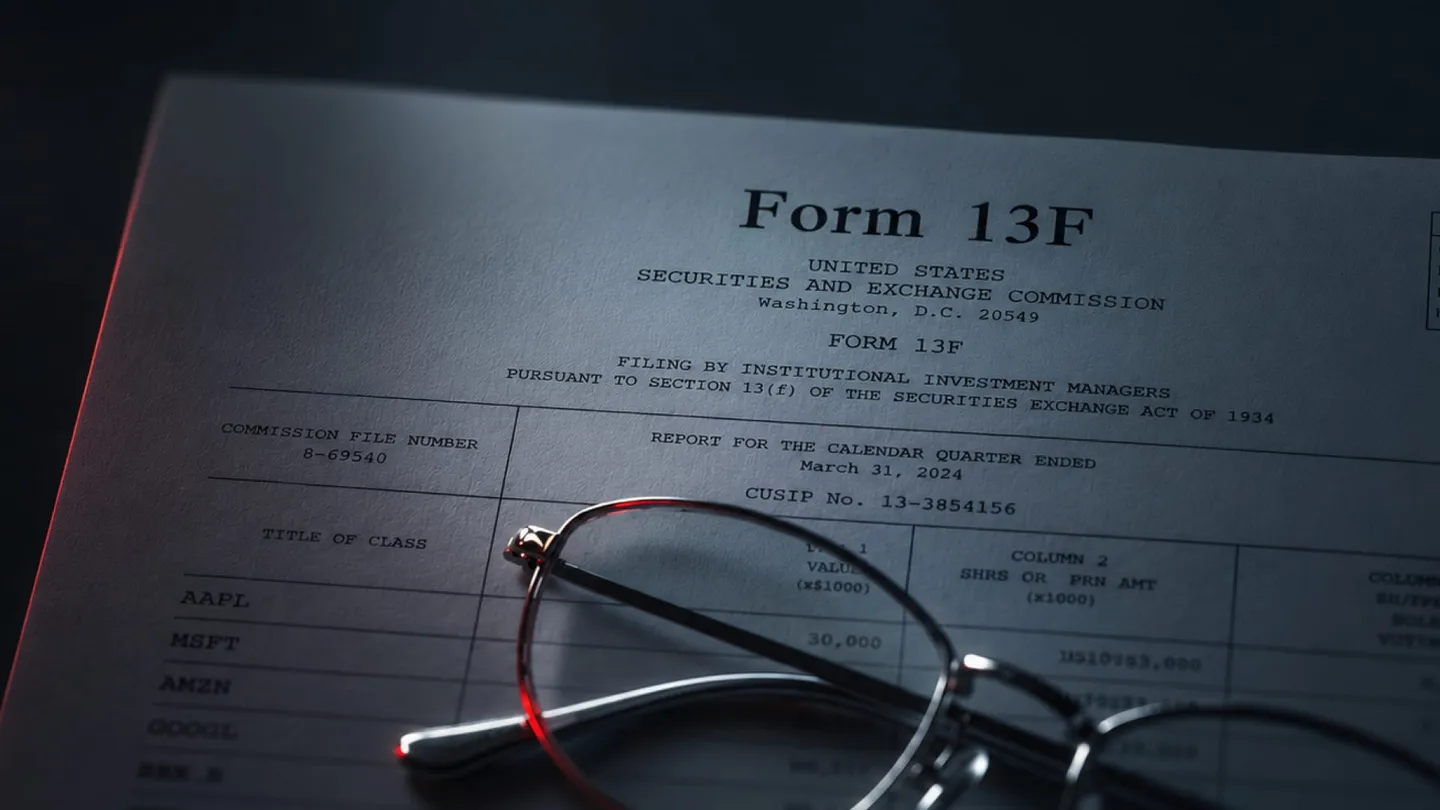
Retail investors closely watch quarterly 13F filings for clues to what star investors are buying or selling. The Q1 2026 filings (for holdings as of March 31, 2026) brought some of the biggest portfolio reshuffles in recent memory. Below we break down the key moves from Warren Buffett’s Berkshire Hathaway, Bill Ackman, Stanley Druckenmiller, Altimeter Capital, David Tepper’s Appaloosa Management, and NVIDIA’s own investment portfolio.
Warren Buffett (Berkshire Hathaway) makes Alphabet a top-five holding and returns to airlines
Berkshire Hathaway’s Q1 2026 filing was the most consequential of the season, and also the first full quarter under Greg Abel as CEO. The conglomerate nearly tripled its Alphabet ($GOOG/$GOOGL) stake, purchasing roughly 40 million additional shares to bring the total to around 57.8 million shares worth approximately $16.6 billion. That single move pushed Alphabet from a mid-sized position into Berkshire’s fifth-largest holding.
Berkshire also returned to the airline sector for the first time since its high-profile pandemic exits. The firm initiated a new position in Delta Air Lines ($DAL), picking up roughly 39.8 million shares valued at around $2.65 billion. The firm also tripled its stake in The New York Times ($NYT) and opened a new position in Macy’s ($M).
On the sell side, Berkshire cut Chevron ($CVX) by 35% and slashed Constellation Brands ($STZ) by 95%. It fully exited Visa ($V), Mastercard ($MA), UnitedHealth ($UNH), and Amazon ($AMZN), along with smaller holdings including Domino’s Pizza ($DPZ), Aon ($AON), and Pool Corp ($POOL).
Bill Ackman (Pershing Square) dumps Alphabet to fund a major Microsoft bet
Pershing Square’s biggest move of the quarter was initiating a roughly $2.1 billion position in Microsoft ($MSFT), around 5.65 million shares, while cutting its Alphabet ($GOOG) exposure by approximately 95%. According to Reuters, Ackman started building the Microsoft position in February after the stock fell, arguing that Azure and Microsoft 365 made the valuation hard to ignore given the AI skepticism in the market at the time. Alphabet was the primary source of funding for the switch.
Microsoft jumped immediately into Pershing’s top four. Amazon ($AMZN) moved from fourth to second after Ackman added about 1.84 million shares, while Hilton Worldwide ($HLT) was sold out entirely. Brookfield ($BN) and Uber ($UBER) were held roughly flat. Reuters later reported that Pershing sold its remaining Alphabet shares in Q2, completing the rotation.
The portfolio now sits in an even tighter group of U.S. compounders: Amazon, Microsoft, Brookfield, Uber, and Howard Hughes.
Stanley Druckenmiller (Duquesne Family Office) exits macro bets and pivots to biotech and energy
Druckenmiller’s Duquesne Family Office stepped away from broad market exposure in Q1, exiting Alphabet ($GOOGL), the Financial Select Sector SPDR ($XLF), Delta Air Lines ($DAL), and American Airlines ($AAL) all in the same quarter. That cleared out a significant chunk of macro-beta and travel positions in one move.
The capital was redeployed into more targeted ideas. Duquesne initiated new positions in Caris Life Sciences ($CAI), Nuvation Bio ($NUVB), Olema Pharmaceuticals ($OLMA), and Broadcom ($AVGO). The firm also quadrupled its stake in YPF ($YPF), the Argentine oil company, and more than tripled its position in STMicroelectronics ($STM). Natera ($NTRA) held onto its spot as the portfolio’s largest disclosed holding.
Going into Q2, Druckenmiller was running far less generic market exposure and far more single-name risk, concentrated in healthcare, diagnostics, and selective energy and semiconductor names.
Altimeter Capital doubles down on AI infrastructure and exits consumer internet
Altimeter had a clear message in Q1: more AI infrastructure, less of everything else. The fund exited Coupang ($CPNG), Confluent ($CFLT), Alphabet ($GOOGL), MercadoLibre ($MELI), and Zillow ($Z), clearing out several consumer-internet and software names in one sweep.
Those proceeds went into deepening existing positions. Altimeter added about 15% more NVIDIA ($NVDA) shares, raised Uber ($UBER) by roughly 43%, added to CoreWeave ($CRWV) and Taiwan Semiconductor ($TSM), and opened new positions in Arm Holdings ($ARM) and Axon Enterprise ($AXON). NVIDIA stayed the portfolio’s largest position, while Uber rose to third and TSMC climbed to fourth. Arm entered as a meaningful mid-book addition.
This is not a broad tech rally play. Altimeter is concentrating specifically in semiconductors, AI cloud capacity, and platform businesses with direct enterprise leverage, the parts of the AI story where money is already changing hands.
David Tepper (Appaloosa) bets big on Amazon and Uber, exits all airlines
Appaloosa was one of the most active filers of the quarter. The fund nearly doubled its Amazon ($AMZN) position to around 4.32 million shares, lifting it from third to the top of the portfolio. Uber ($UBER) saw an even bigger move: Tepper more than tripled his exposure, adding about 4.48 million shares to take Uber from 17th all the way to fourth.
Appaloosa also opened a new position in SanDisk ($SNDK), doubled Vistra Energy ($VST), and added modestly to Taiwan Semiconductor ($TSM) and Micron ($MU). On the other side, the fund exited all three of its airline holdings: American ($AAL), Delta ($DAL), and United ($UAL). Alibaba ($BABA) was trimmed by about 33%, dropping from the top spot to sixth. Microsoft ($MSFT) was cut by roughly 82% and Qualcomm ($QCOM) by about 57%.
The overall shift points away from travel and China internet and toward U.S. platform businesses, AI-adjacent memory, and power-generation names.
NVIDIA’s own portfolio nearly doubles CoreWeave and adds a major optics position
NVIDIA Corporation ($NVDA) files its own Form 13F each quarter disclosing strategic equity holdings, and Q1 2026 showed two notable moves. The company nearly doubled its CoreWeave ($CRWV) stake, adding about 22.9 million shares to bring the position to roughly 47.2 million shares worth $3.66 billion. CoreWeave, which runs NVIDIA GPU clusters for AI customers, moved from third to second in the disclosed portfolio.
NVIDIA ($NVDA) also started a new position in Coherent ($COHR), a maker of optical and photonic components for data center networking. The company acquired 7.79 million shares worth approximately $1.86 billion, making Coherent its fourth-largest position right out of the gate.
The move aligns with NVIDIA’s broader bet on photonics infrastructure. Earlier this year, the chip giant committed $2 billion to Coherent as part of a wider $4 billion strategic investment across the photonics sector, signaling that optical components are becoming core AI infrastructure.
Intel ($INTC), Synopsys ($SNPS), Nokia ($NOK), and Nebius Group ($NBIS) were all held unchanged, while a small new position in Generate Biomedicines ($GBIO) rounded out the changes.
The portfolio reads more like a map of the AI infrastructure ecosystem than a passive investment account, which is probably exactly how NVIDIA intends it.
Bottom line
The Q1 2026 13F season was largely about concentration. Nearly every major filer added to their highest-conviction positions while cutting names they viewed as non-core, too cyclical, or too removed from the AI story.
The sharpest disagreement was over Alphabet. Berkshire massively increased it while Pershing Square, Altimeter, and Duquesne all sold out. That kind of split at the top of the market cap ladder is a reminder that 13F season reflects individual conviction, not shared wisdom.
The one thread that did run through most of the portfolios was AI infrastructure. NVIDIA, Altimeter, and Appaloosa all added to CoreWeave, TSMC, or semiconductor names. NVIDIA added Coherent for the optics layer. Appaloosa added SanDisk for AI memory exposure. Even Berkshire’s Alphabet position is partly a bet on search and Google Cloud holding up in an AI-driven world.
The bottom line for retail investors is that the debate among these managers has moved on from whether AI matters. The question now is which parts of the AI stack are actually generating returns at current prices. The answers varied, but the direction was consistent.
As always, 13F filings are backward-looking. They show what these managers held on March 31, not what they are doing today. Positions can change significantly in the weeks between quarter-end and when filings go public.
This article is for informational purposes only and is neither investment advice nor a solicitation to buy or sell securities. All investment involves inherent risks, including the total loss of principal, and past performance is not a guarantee of future results. Always conduct thorough research or consult with a financial expert before making any investment decisions. BBAE has no position in any investment mentioned.